Who Leads the Race in India's Booming OTT Sector?
How the market took shape, why live sport and regional content decide position, and what streaming volume means for the operators carrying it.
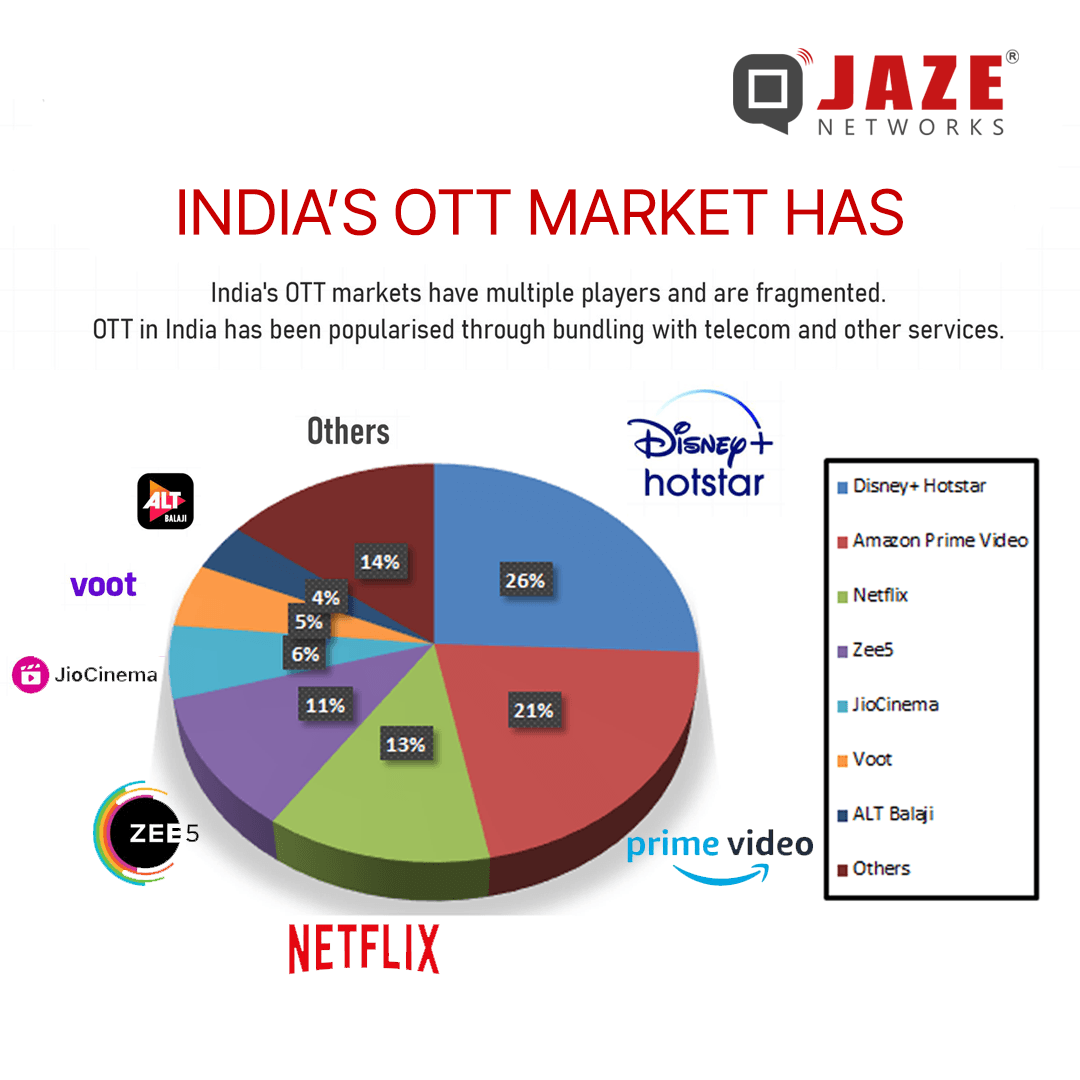
India's streaming market grew quickly on the back of two things that arrived together: inexpensive mobile data and smartphones cheap enough to be near-universal. The result is a market with a large audience, low willingness to pay, and unusually fierce competition for attention.
The shape of the market
A handful of platforms account for most viewing. Disney+ Hotstar, Amazon Prime Video, Netflix and JioCinema are the names that come up in any discussion of the sector, and each arrived at its position by a different route.
Live sport has been the single most effective acquisition tool. Cricket rights in particular move subscribers in a way that drama catalogues do not, because the audience has to be present at a specific moment rather than whenever it suits them. That makes rights auctions the most consequential events in the market, and it explains why platforms bid well beyond what the content earns directly.
Regional language content has been the other decisive factor. India is not one audience, and platforms that invested in production across languages reached viewers that a Hindi and English catalogue never would. That investment is slower to pay back than sport and tends to hold subscribers longer.
Why pricing works differently
Subscription prices sit far below what the same services charge elsewhere, because they have to. The audience is large, and the amount any individual will pay is small.
That has pushed the market toward models other than straightforward subscription: advertising-funded tiers, bundling with mobile plans, and free access to selected content as a route into a paid tier. Bundling in particular blurs the question of who the customer is, since a subscriber acquired through a telecom plan behaves differently from one who chose the service directly.
What it means for an operator
Streaming is the dominant driver of consumer traffic, which makes it an operator's problem whether or not the operator sells it.
Capacity is shaped by it. Peak demand follows the content schedule. A major live match produces a concentrated spike that has nothing to do with the daily pattern the rest of the week follows, and capacity has to be planned for the spike rather than the average.
Peering and caching matter more than transit. Streaming traffic is concentrated among a small number of sources, which makes it exactly the kind of traffic that peering arrangements and local caching handle well. An operator carrying that volume over paid transit is paying for something avoidable.
Bundling is a commercial opportunity. Content packaged with connectivity raises revenue per subscriber and gives a reason to stay that a competitor matching on price alone does not address.
Quality complaints arrive at the ISP. When a stream buffers, the subscriber contacts whoever sold them the connection, regardless of where the fault actually is. That makes visibility into what a session actually did the difference between a diagnosis and an argument.
The bundling side in particular depends on the billing platform being able to represent a content add-on as part of the subscriber's plan rather than as a separate arrangement tracked elsewhere. Jaze ISP Manager handles that within the same subscriber record as the connectivity itself.