Strengthening ISP Networks with AAA Protocols
Authentication, authorisation and accounting as separable problems, how RADIUS, TACACS+ and Diameter differ, and what a sound deployment needs.
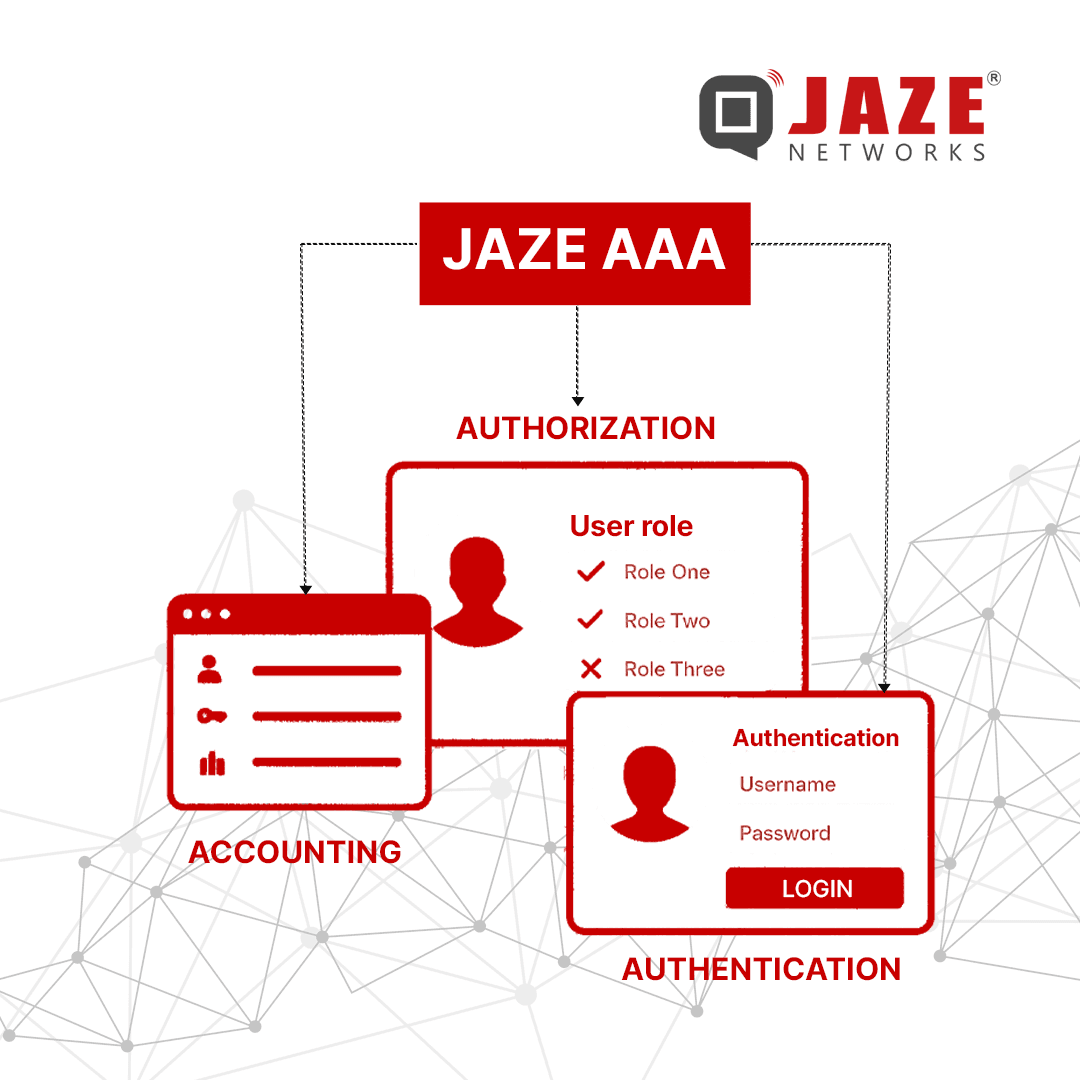
Every network that lets people connect to it has to answer three questions in order: who is this, what are they allowed to do, and what did they do. The AAA framework exists because those questions are separable, and because answering them consistently across a large network is harder than it first appears.
The three parts
Authentication establishes identity. A subscriber or device presents credentials and the network decides whether to believe them.
Authorisation determines entitlement. Given a confirmed identity, what service applies: which speed, which policy, which parts of the network are reachable.
Accounting records what happened. Session start and stop, volume transferred, duration, address assigned.
Keeping them distinct matters in practice. Identity changes rarely, entitlement changes whenever a subscriber changes plan, and accounting accumulates continuously. Systems that conflate them tend to make plan changes harder than they should be.
Why it matters to an operator
Access control that holds at scale. Verifying each connection is what prevents service being consumed by accounts that should not have it, and the problem is not the first thousand subscribers but the hundred thousandth.
Policy that follows the subscriber. Authorisation is how a plan becomes network behaviour. A subscriber on a particular tariff gets particular treatment because the authorisation step said so, not because someone configured a port.
Billing that reflects reality. Accounting records are the input to invoicing. If they are incomplete or arrive late, the bill is wrong, and the error surfaces as a support contact rather than as an alert.
Regulatory obligations. Most jurisdictions require operators to retain records of who was assigned which address at which time. Accounting data is what answers that, and it needs to be retained and queryable well after the session ended.
The protocols in use
RADIUS is the most widely deployed for subscriber access. It runs over UDP, which keeps it light and fast, and it is what the great majority of broadband and wireless deployments use for authenticating subscribers. Its vendor-specific attributes are how policy is expressed in practice, and how the same authorisation decision is translated for equipment from different manufacturers.
TACACS+ is aimed at a different problem: administrative access to network devices. It separates the three functions more strictly than RADIUS and runs over TCP, and it gives fine-grained control over which commands an administrator may issue. Most operators run both, RADIUS for subscribers and TACACS+ for staff access to equipment.
Diameter was designed as RADIUS's successor, with reliable transport, better failover and a more extensible message structure. It is standard in mobile core networks and comparatively uncommon in fixed broadband, where RADIUS remains entrenched.
Getting the deployment right
Redundancy is the first consideration. If authentication is unavailable, subscribers cannot connect, which makes the AAA server one of the least acceptable single points of failure in an operator's network. It needs redundancy and it needs testing.
Accounting reliability is the second. Interim updates during long sessions prevent a lost stop record from producing a session that appears never to have ended, which is a common source of billing disputes.
Vendor attribute handling is the third, and it is where most of the practical difficulty lives. Cisco, Juniper, Huawei, ZTE and MikroTik all express the same policy intent differently, so a mixed network needs the authorisation layer to translate rather than requiring one configuration per vendor.
Jaze ISP Manager's AAA module is built around this, authenticating sessions from any BNG or NAS, applying plan policy through each vendor's own attributes, and keeping accounting on the session for billing and audit.