Inside the Internet: How ISPs, BGP, and Global Networks Keep the World Connected
Autonomous systems, BGP route selection, the ISP tiers, peering versus transit, and why CDNs matter to an operator's backbone costs.
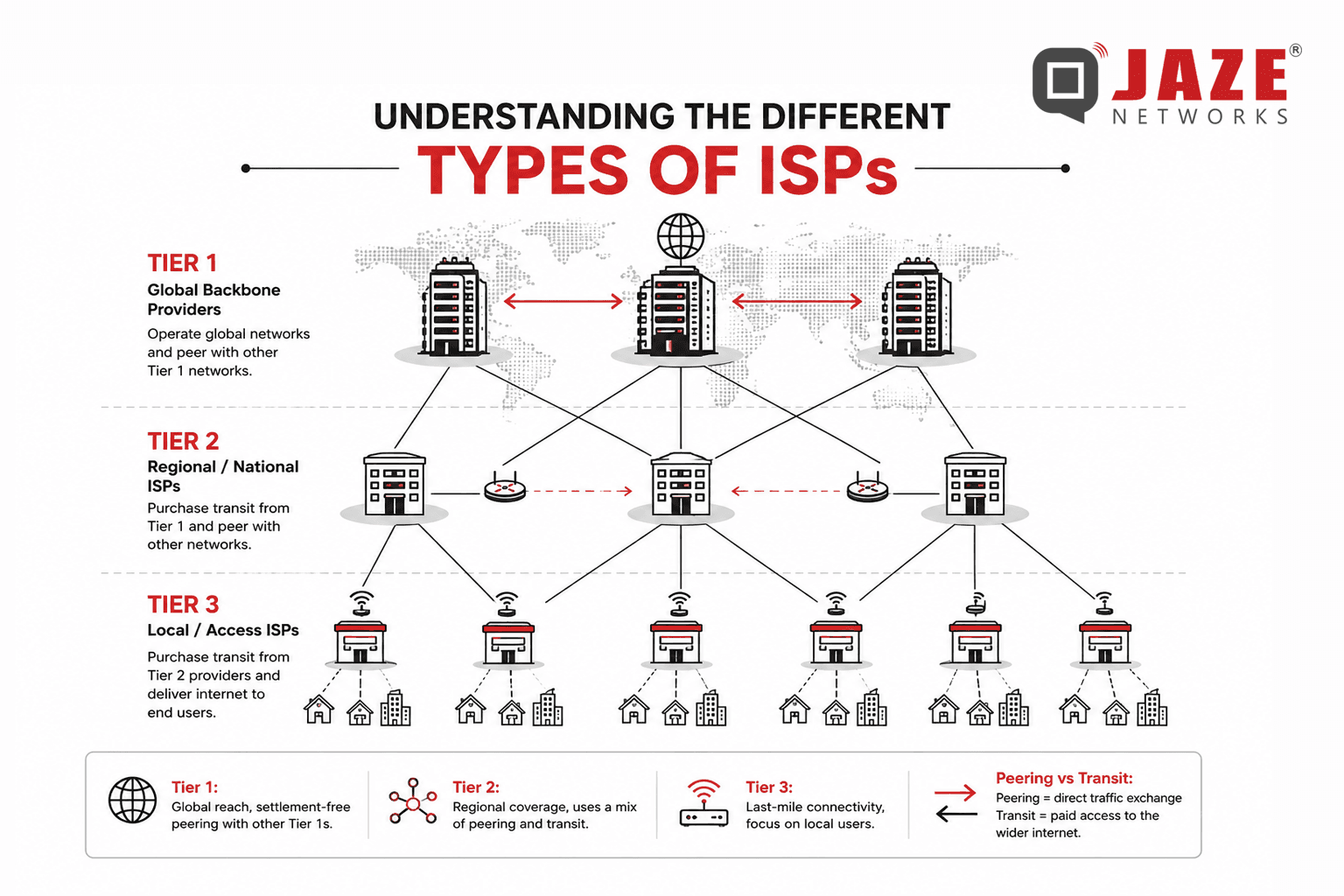
Table of contents
Connecting to the internet feels instantaneous. Behind that moment sits a sophisticated infrastructure spanning continents. The internet is not centrally owned by anyone. It is a global ecosystem of interconnected networks, where ISPs, carriers, exchange points and routing protocols work together to deliver traffic reliably.
The internet is a network of autonomous systems
An Autonomous System is a collection of IP networks managed by a single organisation under a unified routing policy. Each major organisation receives a unique Autonomous System Number, or ASN.
This decentralised model is what allows the internet to stay scalable, resilient and capable of handling billions of connected devices. No single operator has to know the whole map; each one only has to know its neighbours and its policy.
How data finds its destination
The Border Gateway Protocol is the routing protocol of the internet. BGP lets networks advertise the IP ranges they can reach and determine the best path to everywhere else.
Route selection is not simply a question of physical distance. It weighs routing policies, network availability, commercial agreements and overall path efficiency. Because those advertisements update continuously, BGP also provides automatic failover when a link or a network goes down.
Understanding the different types of ISPs
Providers are traditionally grouped into three tiers.
Tier 1 operators run global backbones and exchange traffic directly with one another without paying transit fees.
Tier 2 operators balance direct peering with purchased transit. National telecom operators typically sit here.
Tier 3 providers are regional or local, delivering service directly to customers and buying upstream connectivity to reach the rest of the internet.
In practice the modern internet is messier than a clean three-tier hierarchy, but the model remains a useful way to think about who pays whom.
Peering and transit: keeping traffic efficient
Peering lets two networks exchange traffic directly, which improves performance and reduces cost for both. IP transit is the purchase of broader internet reachability from another network.
Internet Exchange Points are the neutral locations where this happens at scale. In India, NIXI provides that meeting ground, keeping local traffic local rather than hauling it across the world and back. The result is lower latency and a better experience for end users.
Why content delivery networks matter
CDNs distribute content across many geographic locations and cache frequently accessed material close to users.
For an ISP, that means less backbone congestion and lower latency. For subscribers, it means faster loading on streaming, gaming and enterprise applications, because the content is coming from somewhere nearby rather than from another continent.
The growing complexity of ISP operations
Running a network is only part of the job. Alongside routing and capacity, an ISP manages subscriber onboarding, service provisioning, billing, customer support, complaint resolution, payment collection, regulatory compliance and business reporting.
As subscriber numbers grow, integrated management systems become just as critical to operational efficiency as the network infrastructure itself.
Conclusion
The internet is a remarkable example of global collaboration, built on standardised protocols and shared infrastructure that competing organisations agree to maintain together.
Robust network infrastructure remains the foundation. But efficient business operations are just as decisive for a provider's success, which is where a platform like Jaze ISP Manager handles subscriber management, billing and the operational scale that growth demands.