India's Digital-First Population: A Game-Changer for the Business Events Industry
What arriving online through a smartphone changes about user expectations, and why venue connectivity is now infrastructure rather than amenity.
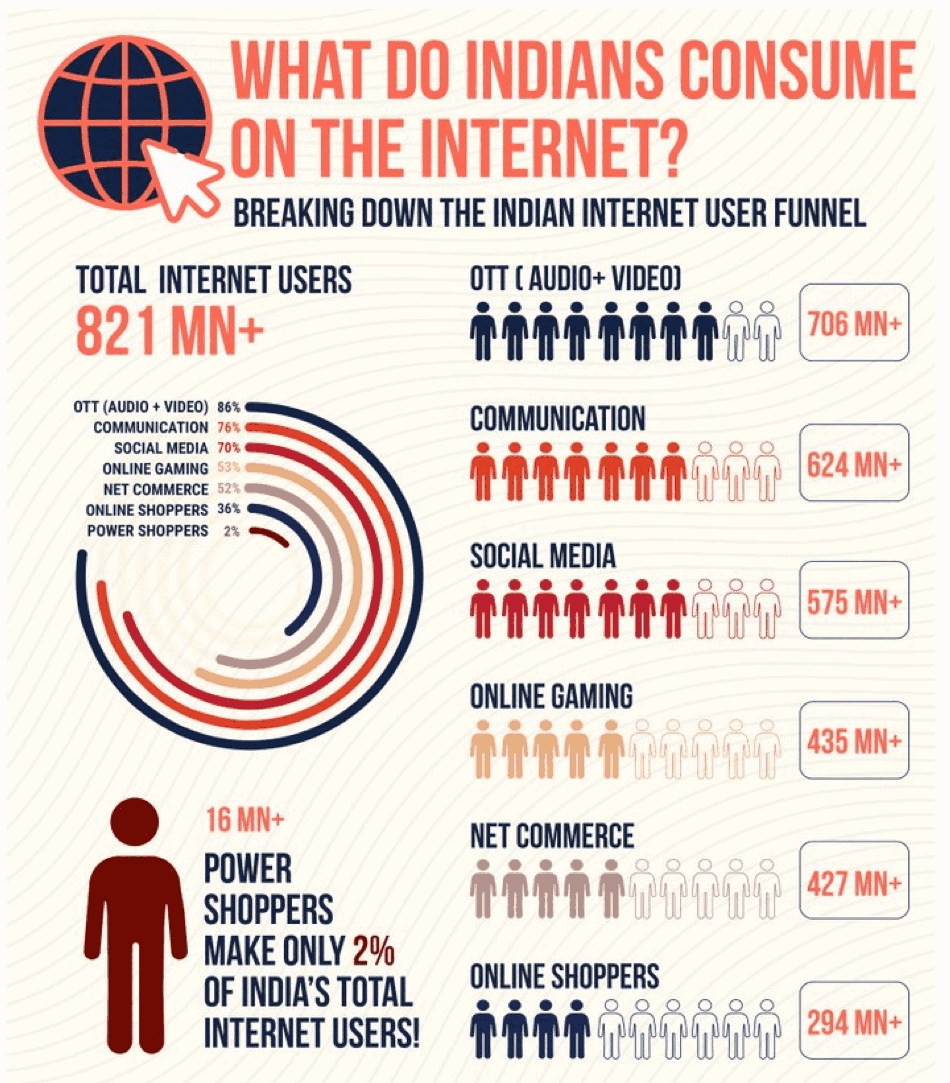
India reached mass internet adoption by a different route from most large economies. Rather than moving gradually from desktop to laptop to phone, a very large share of the population arrived online through a smartphone and stayed there. Affordable handsets and inexpensive data did most of the work.
That produces a user base with different habits from one that grew up around a desktop, and the differences matter to anyone designing services for it.
What mobile-first actually implies
The obvious consequence is that the phone is the primary computing device rather than a secondary one. The less obvious consequences follow from that.
Connections are shared, intermittent and metered in ways fixed connections are not, so applications that assume continuous connectivity behave badly. Interfaces designed for a large screen and a mouse translate poorly. Growth is increasingly coming from smaller cities and towns rather than the largest metros, which shifts assumptions about language, network quality and prior familiarity with digital services.
What it means for events and gatherings
The business events sector is a useful illustration, because it sits at the intersection of physical infrastructure and digital expectation.
Reach is no longer bounded by the room. An audience that is comfortable consuming content on a phone can participate from anywhere, which makes the in-person event one component of something larger rather than the whole of it. Registration, agendas and networking that work properly on a phone are a baseline expectation rather than a differentiator.
Venues are judged on connectivity. A venue's network has moved from amenity to core infrastructure. Delegates upload and stream throughout, sessions are broadcast live, and hundreds of devices attach and reattach across a day. A network that copes with browsing does not necessarily cope with that, because the demanding direction is upstream and the demanding characteristic is device density rather than aggregate throughput.
The load profile is unusual. Attendance is concentrated in time and space, arrives and leaves in waves, and peaks precisely when it is most visible. It looks less like an office network and more like a temporary public deployment.
The infrastructure question underneath
For anyone providing connectivity into venues, this is a specific and recognisable problem: high device density, heavy upstream use, guests who need access without a lengthy provisioning process, and usage policy that has to be applied without a technician standing by.
That means guest access that works on first attempt, capacity planned for concurrent devices rather than headline speed, per-user policy so a handful of heavy users cannot degrade the room, and visibility into what is happening while it is happening rather than in a report afterwards.
Jaze Cloud Wi-Fi covers that pattern, handling multi-location hotspot deployment, guest login through voucher, SMS or social sign-in, and usage policy applied centrally, which is what makes a venue network manageable when the number of people in the building changes by the hour.