How Internet Exchange Points (IXPs) Enhance Global Connectivity
What an exchange provides, why peering beats transit for local traffic, and how to judge whether joining one is worth the cost.
Networks have two ways to reach each other: pay someone to carry the traffic, or connect directly and exchange it. An Internet Exchange Point is the shared facility that makes the second option practical at scale.
What one is
An IXP is a physical location where many networks connect to a common switching fabric. Each participant brings a link into the exchange, and from there can peer with any other participant present.
The alternative is transit, where a network pays an upstream provider to reach the rest of the internet. Transit is simple and it is billed by volume. Peering at an exchange replaces per-megabit charges with the fixed cost of a port and a cross-connect, and for traffic that has somewhere local to go it is substantially cheaper.
How the exchange works
Participants connect routers to the exchange's switching fabric and establish BGP sessions with each other, either bilaterally or through a route server that lets a network reach many participants through a single session.
What the exchange itself provides is the shared layer 2 fabric. It does not route traffic or decide policy. Each participant chooses who to peer with and what to announce, which is why two networks can both be present at an exchange and still not exchange traffic.
Why it matters
Latency. Traffic between two local networks that peer at a local exchange stays local. Without that, it may travel to another city or another country to reach a common upstream and come back, adding delay that has nothing to do with the physical distance between the two subscribers.
Cost. Traffic exchanged at a peering point is not traffic billed by a transit provider. For an operator carrying a large volume of streaming and content traffic, this is one of the more significant levers available on operating cost.
Resilience. Multiple paths mean a transit failure need not be an outage.
Local content stays local. Where content providers and caches are present at an exchange, the traffic that dominates consumer volume is served from within the region.
What it takes to participate
An exchange has a joining cost: the port, the cross-connect, transport to reach the facility, and equipment at the far end. Below a certain traffic volume, transit is simply cheaper, and the crossover point is worth calculating rather than assuming.
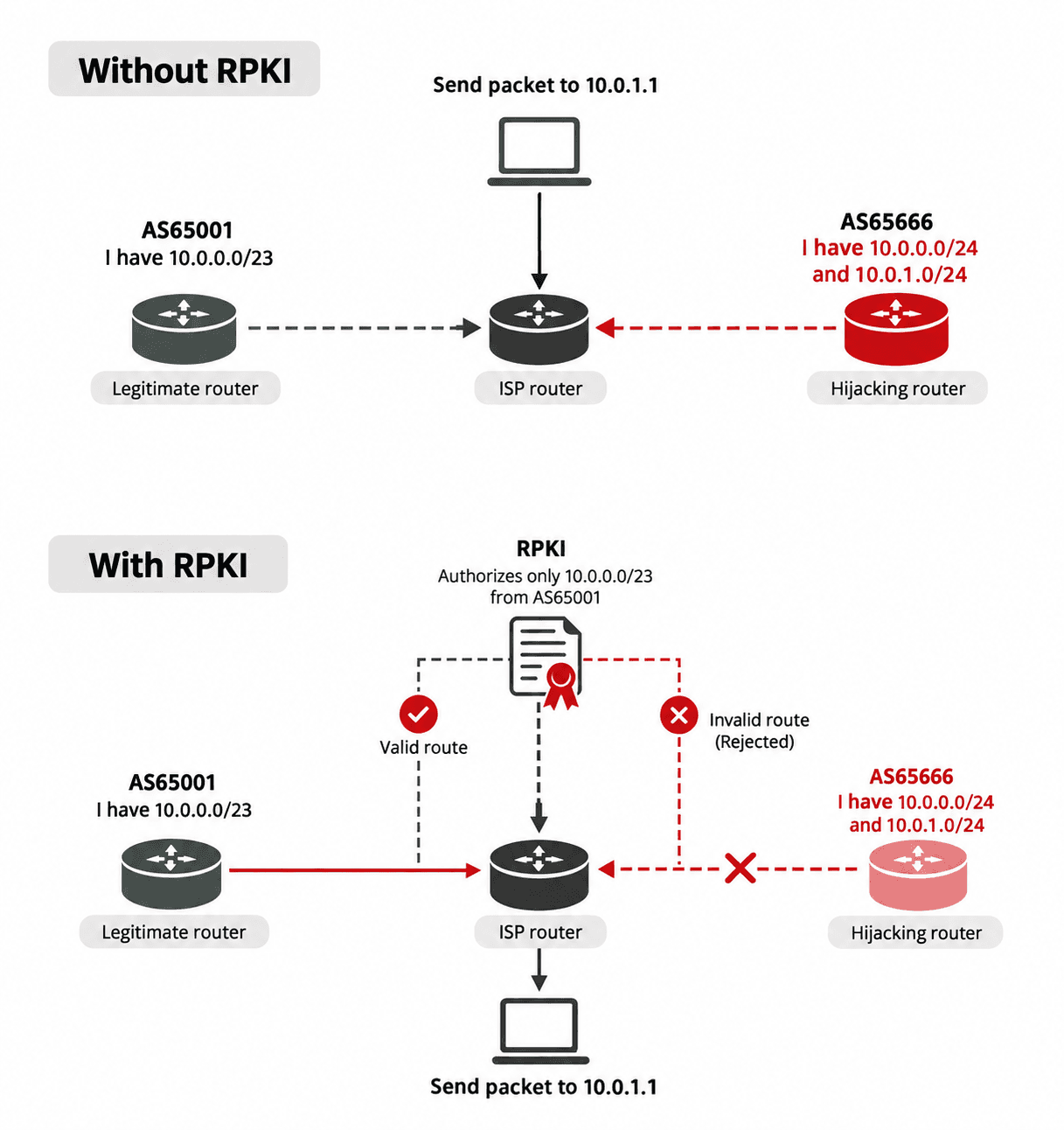
Participation also requires being able to operate BGP properly, including filtering what you accept and announce. A misconfigured session at an exchange affects other participants, which is why route filtering and the associated routing security practices are treated as a condition of membership rather than as good manners.
The strategic view
Exchanges concentrate networks, which makes them worth more as more networks join, and this is why traffic and interconnection concentrate in a small number of locations within any region.
For a regional operator the practical question is which exchange has the networks and content sources their own subscribers actually reach. An exchange with many participants that your traffic never touches saves nothing. One with the content providers your subscribers use every evening changes both the cost base and what those subscribers experience.
Knowing which is which requires knowing where your traffic actually goes. Flow records are what turn that from an assumption into a measurement, and the peering case is usually made or lost on that data.